Willowbrook Hall
When You Were MineWillowbrook Hall is the Davenport family home, where Isobel Davenport and Peter Davenport’s family history converges with Isobel’s developing relationship with Dominic Cavendish and the crisis caused by her uncle Rupert Davenport. It is both a place of intimacy and a threatened refuge: Dominic first comes there as Peter’s guest, but later finds the household confused and afraid after Rupert removes Isobel by claiming guardianship. The house’s significance lies not in any described architectural feature, but in what it represents to its occupants—a home, a family inheritance, and a place from which Isobel is taken under false pretences.
Family Home and Early Visits
Willowbrook Hall is identified as Isobel’s home, and it is where Dominic eventually accepts Peter’s invitation to meet his sister. Dominic’s visit had been delayed after his uncle’s death left him responsible for estates that required attention. Once he was able to travel to Oxfordshire, he stayed with Peter and Isobel at Willowbrook Hall for several weeks. Their time there gave him and Isobel the opportunity to know one another, with Peter allowing them time together without explicitly urging them toward marriage.
Leaving the house for his own estate in Melton proved unexpectedly difficult for Dominic. He found himself unhappy without Isobel’s company and returned to see her when he could. Over the following months he visited Willowbrook Hall repeatedly; when he lacked a reason to visit the house itself, he sought excuses to visit his uncle, who lived nearby. These journeys made Willowbrook Hall the recurring setting for a courtship that developed through repeated encounters rather than a single declaration. Dominic hoped that time would allow Isobel to grow accustomed to their relationship before he asked for her hand.
The house thus holds an early version of the future Dominic later regrets not securing. Looking back after Isobel is believed dead, he thinks he should have proposed before leaving for Norfolk and married her before departing on his mission. He imagines that she would have been safe at Havistock Hall under his staff’s protection if he had done so. That regret gives Willowbrook Hall a particular place in his recollection: it is where their attachment began to take shape, but it could not protect Isobel once he and Peter were away.
Household and Family Ties
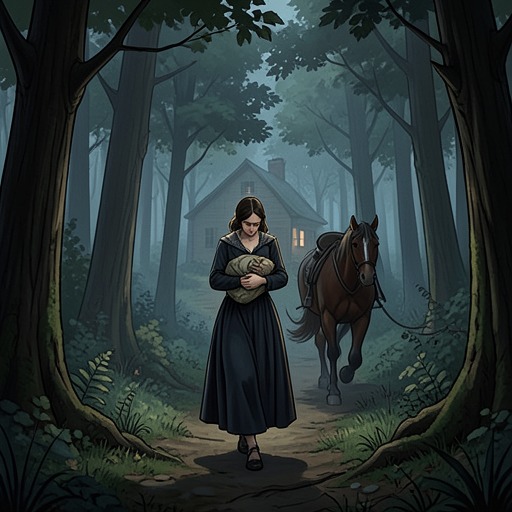
The house is also the setting for Isobel’s connection to her aunt Elspeth and the household staff. After Peter and Dominic return from Norfolk, they find Elspeth distressed and the servants frightened and confused. Elspeth explains that Rupert had come to Willowbrook Hall some weeks earlier and asserted control over Isobel as her guardian. He threatened Elspeth when she objected, then took Isobel away in an unmarked carriage. Elspeth had not known where he was taking her, and had not heard from Isobel since.
Isobel later recounts the same departure from her perspective. She had been at Willowbrook Hall with Elspeth for two and a half weeks when Rupert arrived, announced that Peter had died, and claimed that a magistrate’s report made him Isobel’s legal guardian. He said she had to leave and that the house would be disposed of later. When Isobel resisted, he threatened to have Elspeth sent to an asylum. Isobel agreed to go only after obtaining his promise that Elspeth could remain at Willowbrook Hall for the time being. She had little time to pack, did not know their destination, and insisted that her maid Kitty accompany her. The house is therefore not merely the place from which Isobel disappears: the conditions of her departure show how Rupert uses a fabricated account of Peter’s death and pressure against Elspeth to make Isobel leave.
Courtship, Departure, and Return
Willowbrook Hall shelters the couple’s closeness but also makes the demands of respectability visible. After a night spent together, Dominic and Isobel return to the house at dawn through the kitchen doors, hoping she can reach her room before the household is awake. Dominic is concerned for her reputation and asks to call again before leaving. The quiet return to the same house where their relationship has grown marks a shift in their intimacy, while the need to avoid notice shows the limits placed on Isobel’s freedom of movement and social standing.
Their next separation is enacted in the house’s hall. Dominic and Peter prepare to leave, and Isobel tries to conceal how much Dominic’s restrained farewell hurts her. He departs with a formal bow rather than the affectionate gesture she had expected; Peter embraces her, promises they will return, and leaves as well. Isobel watches them ride away before allowing herself to cry. Willowbrook Hall becomes, in that moment, a place of waiting: she is left behind with Elspeth while the men pursue events elsewhere, and Dominic’s absence gives the coming danger room to take hold.
The house’s connection to Isobel’s later resistance is also expressed through memory and evidence. While recounting what happened to her, she explains that writing the events in sequence helped her recover a previously forgotten detail: Rupert and Bertram DeLisle had tried to make her sign a betrothal document naming DeLisle as her intended. She refused. That document matters because the plan began with the claim to authority made at Willowbrook Hall and continued after she was taken from it. The house is the starting point of a coercive scheme that Isobel later helps expose, not the place where every part of that scheme occurs.
Removal and the House’s Significance
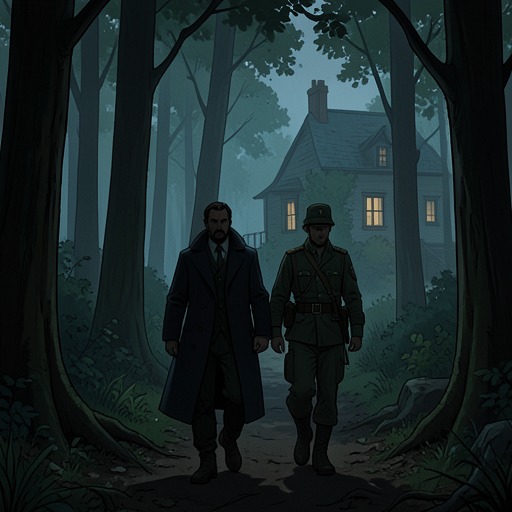
Willowbrook Hall’s vulnerability is sharpened by the family’s absence and by Rupert’s ability to make his claim seem official. Peter and Dominic return only after events in Norfolk are concluded, and find a household that has been left without reliable information. Peter had himself been presumed dead by Elspeth, while Isobel was removed after Rupert represented Peter’s death as the reason he had become her guardian. In the absence of Peter and Dominic, Elspeth’s objections could not keep Isobel at home. The contrast between the house as a familial refuge and the ease with which Rupert takes her from it exposes the gap between belonging and effective protection.
Later, Isobel invokes her husband and the armed household staff when confronting Rupert on the land around her home. Her confidence depends partly on knowing that Dominic is close and that help can be summoned. Peter also challenges Rupert’s assertion of authority, saying he had been Isobel’s legal guardian and had not permitted her to marry anyone except Lord Havistock; he refers to papers documenting an earlier betrothal to Dominic. These exchanges connect the house and its grounds to a struggle over who may claim authority over Isobel and whose documents or testimony will be believed.
When Dominic later lays out the accusations against Rupert and DeLisle, he identifies Willowbrook as the place from which Isobel was kidnapped and contrasts it with Gosport Hall, where she was held. That distinction is important: Willowbrook Hall is Isobel’s home, not the remote lodge where the confinement took place. As the setting for her first meetings with Dominic, her separation from Peter and Elspeth, and the eventual naming of the abduction as a crime, the house gathers together the novel’s central contrast between family attachment and the abuse of claimed guardianship.